Artemis II, a new lunar era takes off
astronomía, Exploración espacial, International
Artemis II, cohete SLS, Luna, NASA, nave Orion, Tierra
2 April 2026
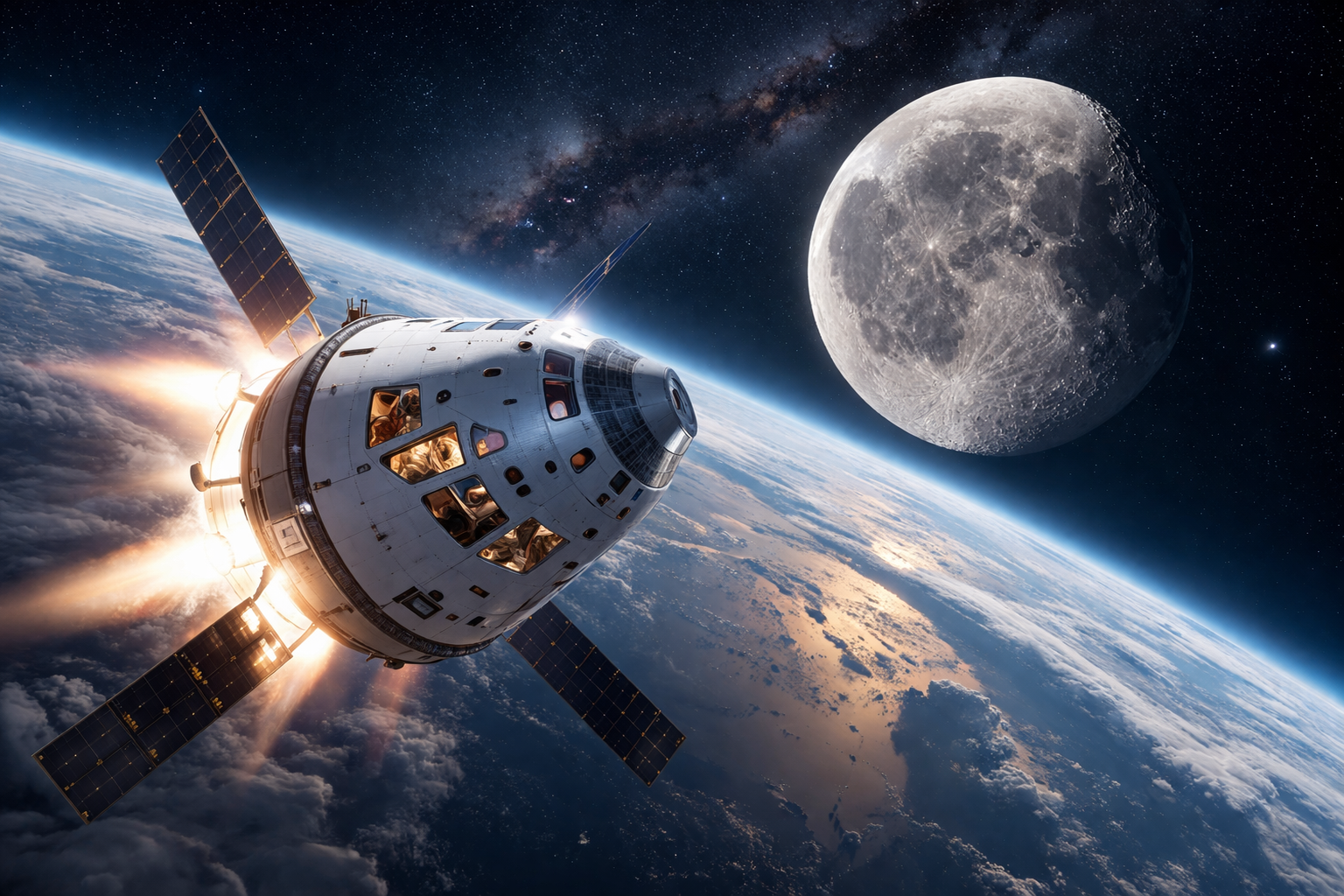
NASA’s Artemis II mission has marked a historic milestone following its launch on April 1, 2026, becoming the first crewed flight to the Moon in more than 50 years since the Apollo program. The Orion spacecraft, powered by the SLS rocket, lifted off from the Kennedy Space Center with four astronauts on board and reached Earth orbit within minutes, beginning an approximately ten-day journey around the Moon without landing.
The crew consists of Reid Wiseman, Victor Glover, Christina Koch, and Jeremy Hansen, in a mission that also stands out for its diversity: it includes the first woman, the first African American person, and the first non-American astronaut to travel to the lunar environment. This flight is not only symbolic but will also serve to test key systems such as life support, navigation, and communications, which are essential for future missions that will include a return to the lunar surface.
In addition, Artemis II will be the first mission to test Orion’s heat shield with astronauts on board during reentry into Earth’s atmosphere at speeds exceeding 39,000 km/h, a critical phase for ensuring safety in future missions. It will also evaluate the performance of the propulsion system and the interaction between the spacecraft and the planned Lunar Gateway station, helping to validate the architecture needed for more complex deep space missions.
Artemis II represents a crucial step within the Artemis program, whose goal is to establish a sustainable human presence on the Moon and prepare for future missions to Mars. The mission aims to break records for the distance traveled by humans in space and to collect essential data, such as images of the lunar south pole, which will be key for planning future bases. With this flight, NASA is laying the groundwork for upcoming missions such as Artemis III and IV, scheduled for the end of this decade.