When technology begins to see: a brain implant gives voice to darkness
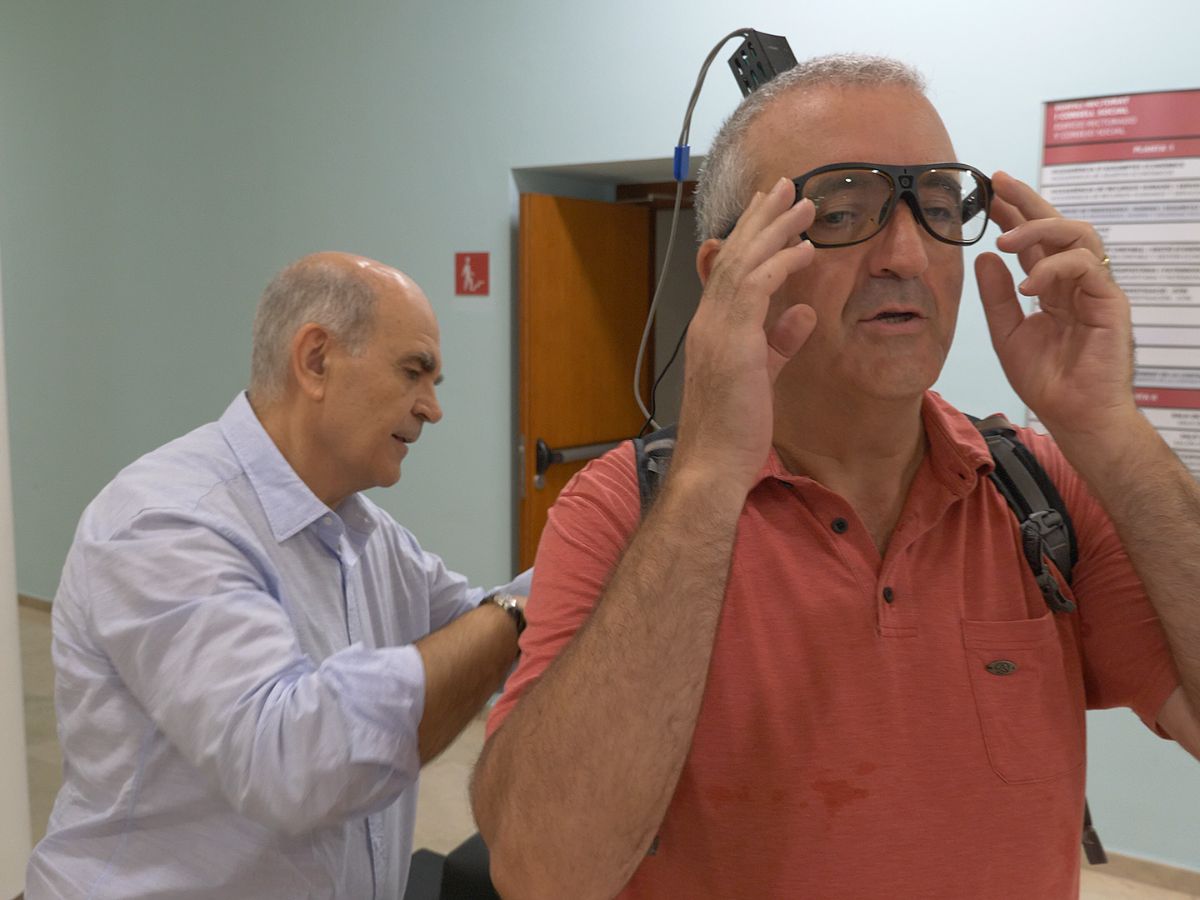
A team of researchers from the Miguel Hernández University of Elche (UMH) has achieved a revolutionary advance in the field of visual neuroprostheses: they have implanted an array of 100 microelectrodes in the visual cortex of two people who had lost their sight. This device—so compact that it fits in a space of just 4 millimeters on a side—acts as an artificial camera that sends electrical signals to the brain, emulating the normal activity of the retina and optic nerve.
But the real novelty is not just passively “giving vision”: it is that the system establishes a dialogue between technology and the brain. While the implant sends electrical stimuli to generate visual perceptions, it simultaneously records neural activity and adapts its action in real time, in a “closed loop” process. Thus, the brain learns from the implant and the implant learns from the brain. This represents an important leap compared to traditional “open loop” systems that do not take into account how the brain changes or adapts.
In practice, this system allows blind volunteers to perceive basic shapes, move with greater autonomy and orient themselves in simple environments. Although it is not yet a complete restoration of sight, the results are promising and point the way towards future solutions that could restore visual functionality to people who today live in darkness. The study, published in the journal Science Advances, has been led by Eduardo Fernández Jover, professor at the UMH and belonging to the area of Bioengineering, Biomaterials and Nanomedicine of the CIBER (CIBER-BBN) and the IMED Hospital of Elche has also collaborated in it.
The researchers warn that much remains to be done: optimizing the resolution of perceptions, ensuring the long-term stability of the implant, reducing surgical risks and improving the interface between camera, processor and brain. Even so, this achievement opens a new chapter in which artificial vision stops being just an external “proctor” and becomes an active partner of the human neural system.