A neural network in the heart
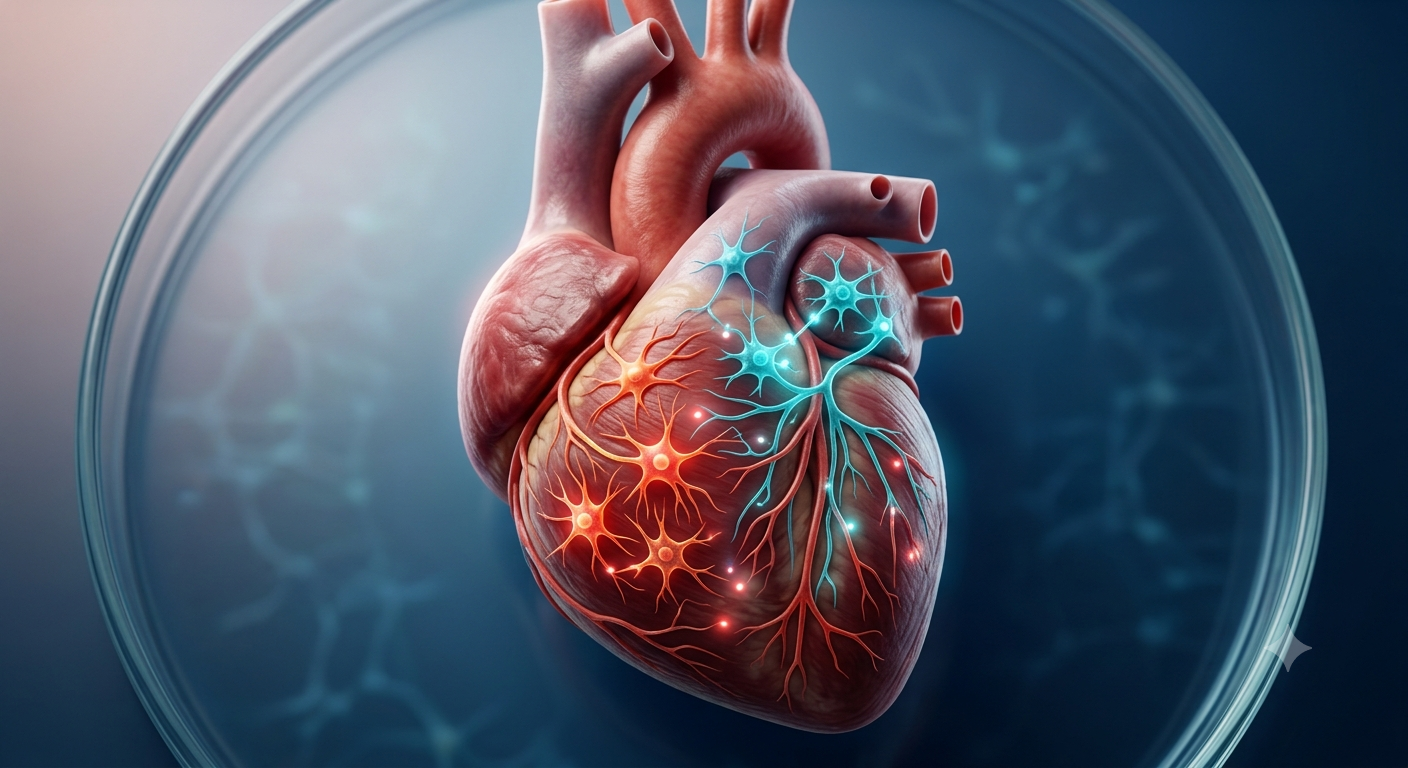
Neural Network in the Heart – AI-generated image.
A study conducted by Yale University and published in the journal Cell has revealed that the heart possesses its own nervous system that is far more complex and influential than previously believed. Although the existence of the intrinsic cardiac nervous system (ICNS) has been known for years, its study has been limited because these neurons account for only 0.01% of heart tissue. Using genetically modified mice along with advanced single-cell sequencing and three-dimensional imaging techniques, the team led by Rui B. Chang successfully mapped and analyzed the behavior of this intrinsic neural network.
The study identified two distinct neuronal populations with complementary and essential functions. On the one hand, Npy+ neurons, which are linked to the parasympathetic nervous system and the vagus nerve, regulate the normal heart rate and ensure proper blood flow through the coronary arteries. In fact, their experimental removal caused fatal heart failure in the mice. On the other hand, Ddah1+ neurons, connected to the sympathetic nervous system, become active during periods of intense physical or emotional stress, maintaining the heart’s electrical stability and preventing sudden cardiac arrest.
Based on these findings, the researchers conclude that the ICNS is not merely a modulatory extension of the brain but rather an integrated circuit that is essential for cardiac performance and the organism’s survival. The study shows that while the Npy+ neuronal population supports normal physiological activity during rest and recovery, the Ddah1+ network serves as a crucial protective mechanism when the body faces extreme adaptive demands.
This discovery opens the door to a paradigm shift in cardiovascular medicine and the development of neuromodulation therapies. At present, interventions such as cardiac ablation target large groups of cardiac nerves without distinguishing between specific cell types. However, the identification of similar genetic markers in human neurons suggests that, in the future, highly targeted treatments could be developed for conditions such as atrial fibrillation and sudden cardiac death.