The Teruel Diplodocus, an exceptional discovery for Spanish palaeontology
Picture: Carmelo López / Taylor & Francis
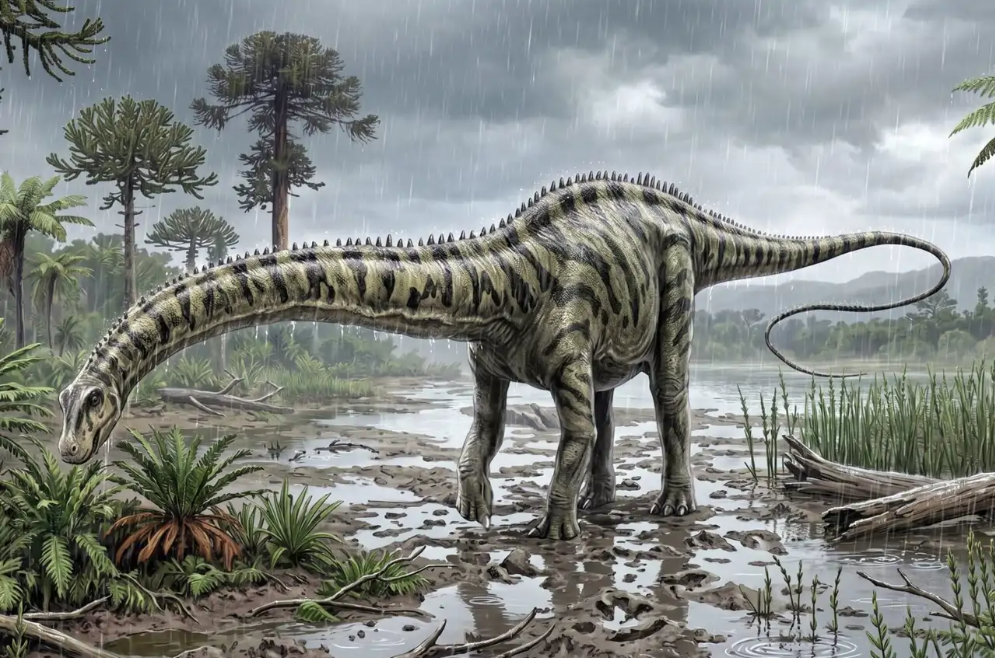
A team of palaeontologists from the Fundación Conjunto Paleontológico de Teruel-Dinópolis has identified remains belonging to a Diplodocus at the La Tejería fossil site in El Castellar, Teruel. The dinosaur lived around 150 million years ago, during the Late Jurassic. The discovery, published in the scientific journal Journal of Vertebrate Paleontology, is exceptional because it represents the first confirmed identification of this iconic dinosaur genus outside North America, where all previously known Diplodocus fossils had been found. The excavated fossils are on display in the dinosaur gallery of the Aragonese Museum of Palaeontology, at Dinópolis in Teruel.
The researchers studied fourteen tail vertebrae and several chevrons, also known as haemal arches, bones located beneath the caudal vertebrae. Their anatomical characteristics and the analyses carried out have enabled the remains to be assigned to the genus Diplodocus. The specimen from El Castellar is estimated to have reached approximately 25 metres in length, making it comparable in size to some of the large specimens found in North America.
The significance of a discovery of this magnitude in Spain goes far beyond the recovery of the remains of an enormous dinosaur. The finding once again places Teruel and Spain in a prominent position within international palaeontology and confirms the extraordinary richness of the Iberian Peninsula’s fossil record. The Diplodocus also joins other giant sauropods discovered in Teruel, such as Turiasaurus and Losillasaurus, further establishing the province as one of Europe’s key areas for understanding the diversity of dinosaurs that inhabited the continent during the Jurassic.
The discovery also requires scientists to reconsider how these animals were distributed and moved around the planet 150 million years ago. The presence of Diplodocus on both sides of what was then the young Atlantic Ocean supports the possibility that temporary land connections existed, allowing faunal exchanges between North America and Europe. The fossils found in Teruel therefore not only enrich Spain’s palaeontological heritage, but also provide a crucial piece of evidence for reconstructing dinosaur history on a global scale and challenge a view that had been held for more than a century about one of the best-known dinosaur genera in prehistory.
Source: National Geographic