2026 Nobel Prize in Medicine honours technology that controls neurons with light
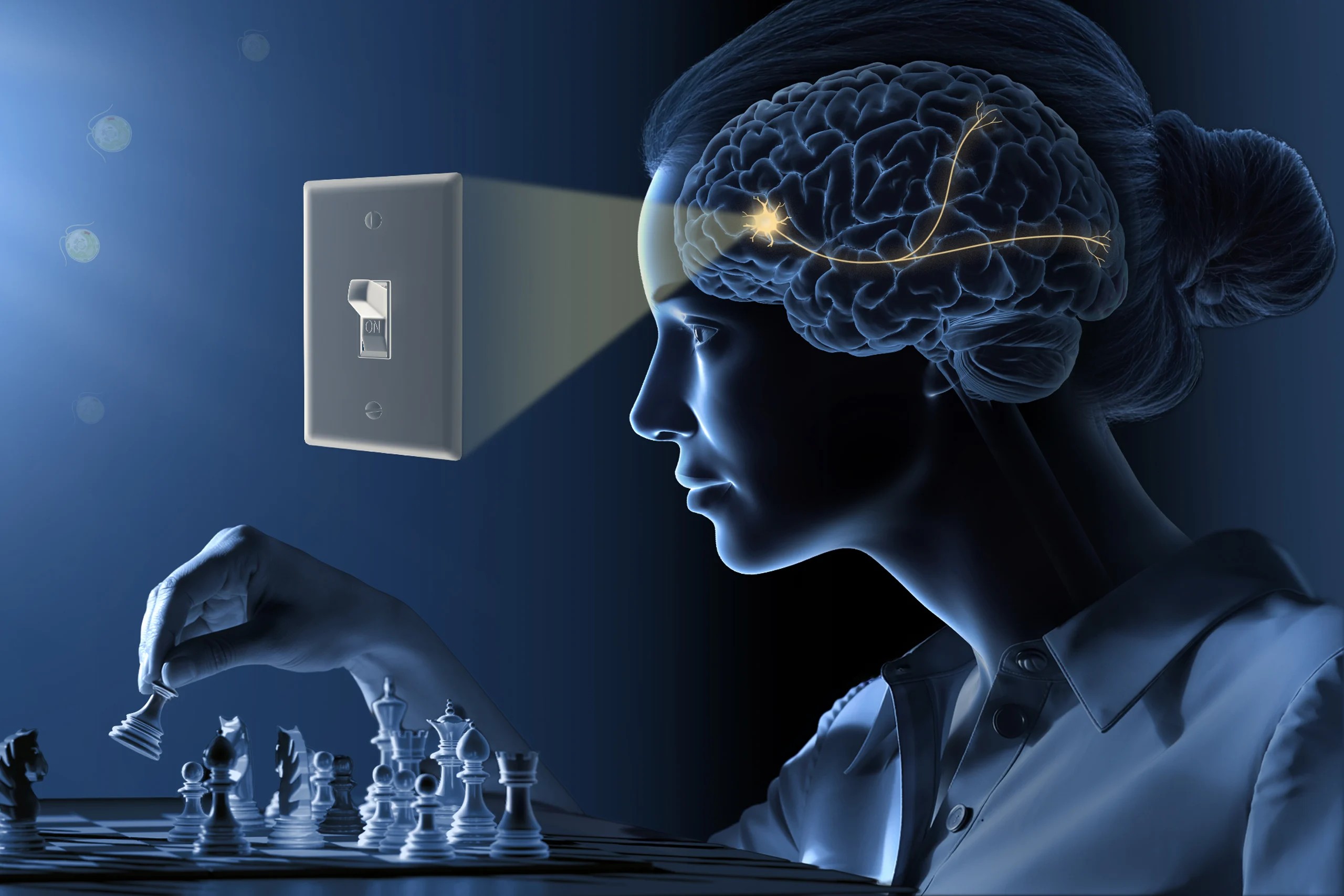
The innovative technology makes it possible to control neurons with light./The Nobel Assembly at Karolinska Institutet
The 2026 Nobel Prize in Physiology or Medicine, announced this Monday, has been awarded to Karl Deisseroth, Peter Hegemann and Georg Nagel, the pioneers of optogenetics, an innovative technology that makes it possible to turn the activity of individual nerve cells on or off in a living brain. It allows neurons to be controlled using light.
The Nobel Assembly at the Karolinska Institutet in Stockholm, Sweden, which awards the prize, considers that this breakthrough “has laid the foundation for a new era in neuroscience”, according to the announcement of the prize.
The German scientists Peter Hegemann, from Humboldt University of Berlin, and Georg Nagel, from the University of Würzburg, laid the foundations for this breakthrough when they discovered the remarkable protein channelrhodopsin in single-celled algae. This light-sensitive protein is vital to the algae because it allows them to move towards sources of light.
Deisseroth later transformed channelrhodopsin into a switch that can turn neurons on and off using light. The breakthrough “has made it possible to show how nerve cells form memories, feelings and behaviours in the living brain”, the Nobel Assembly highlights.
The method is now widely used in laboratories around the world to uncover the mysteries of the brain related to memory, emotions and behaviour. “Optogenetics offers opportunities to map the brain in ways that we could previously only dream of,” said Per Svenningsson, Chair of the Nobel Committee for Physiology or Medicine, raising hopes that this new technique could pave the way for new medical treatments.
So far, the method has provided a better understanding of the distinctive features of psychiatric and neurological disorders such as depression, anxiety, schizophrenia, Alzheimer’s disease and Parkinson’s disease. In clinical medicine, researchers are using it in attempts to restore vision in people with visual impairment.